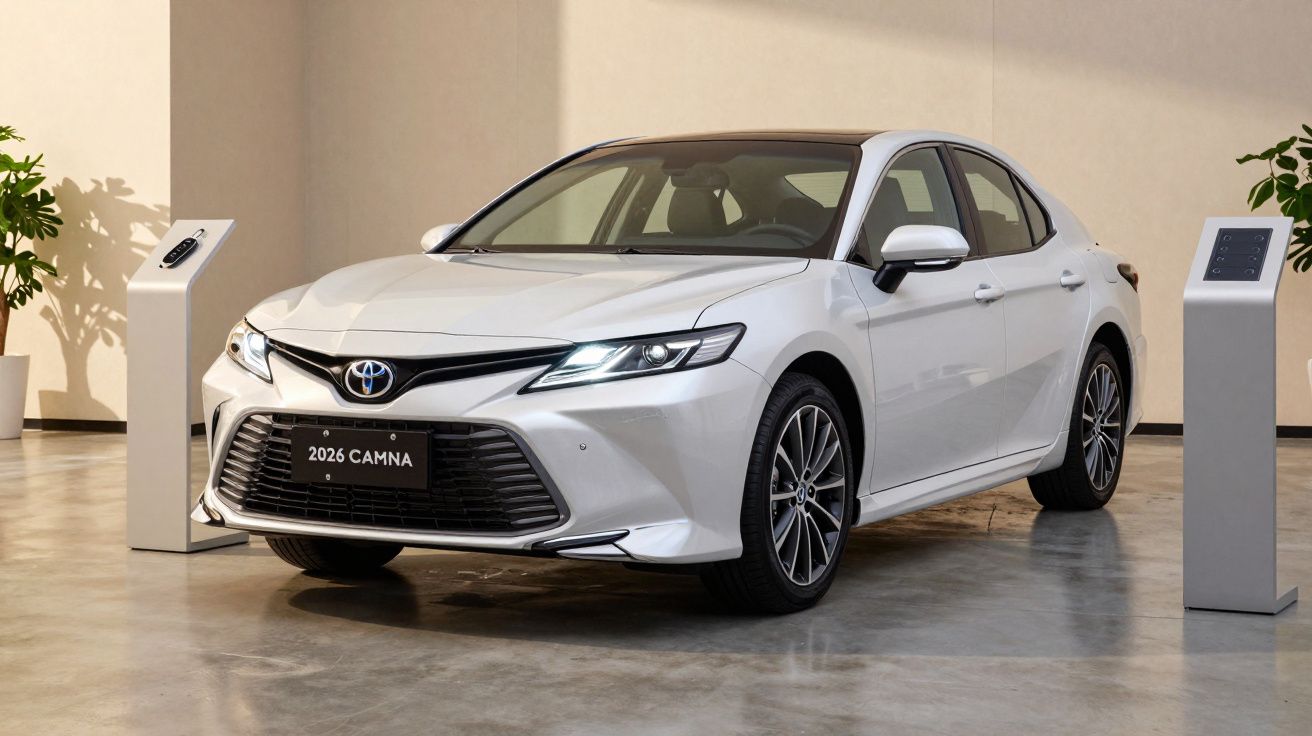
2026 Toyota Camry
The Toyota Camry has long been recognized for reliability, comfort, and easy driving manners. With the 2026 Toyota Camry, Toyota introduces a refreshed design, upgraded features, and stronger performance while keeping the familiar qualities drivers already appreciate. This new model is intended to deliver a smoother ride, updated tech, and excellent fuel efficiency for everyday use.
New Modern Design
The 2026 Camry arrives with a sharper, more stylish appearance. Up front, the grille looks cleaner, the headlights are slimmer, and the body features smoother lines that create a sportier stance. Even with these updates, it still carries the classic Camry character that many owners trust.
Toyota may also bring new paint colors and revised alloy wheel designs, helping the sedan feel more premium and youthful.
Comfortable and Spacious Interior
Inside the cabin, the 2026 Camry puts comfort first. The seats are designed to feel soft yet supportive, helping you stay relaxed even on longer trips. There’s also ample room for both front and rear passengers, which keeps it practical for families and daily commuters alike.
You can also expect a redesigned dashboard with a larger touchscreen, intuitive controls, and improved materials throughout. The cabin will likely be quieter as well, creating a more peaceful driving experience.
Improved Technology
Toyota keeps pushing its in-car technology forward, and the 2026 Camry is expected to offer:
- A larger infotainment system
- Wireless Apple CarPlay and Android Auto
- Improved navigation and voice control
- Multiple USB ports
- A digital instrument cluster
These upgrades make driving simpler and more enjoyable, especially for people who want to stay connected while on the move.
Hybrid Power and Better Efficiency
Toyota is putting even more emphasis on hybrid models, so the 2026 Camry may arrive with enhanced hybrid tech. That should translate into stronger mileage, smoother acceleration, and quieter engine operation.
Drivers can expect:
- Better fuel efficiency
- Lower emissions
- Strong performance for everyday driving
Whether you’re commuting in traffic or cruising on the highway, the 2026 Camry aims to offer a balanced mix of power and efficiency.
In the wider market, Toyota’s hybrid approach also stands alongside well-known third-party comparisons from brands like Honda and Hyundai, which have been expanding their own electrified lineups. Buyers often cross-shop mid-size sedans and hybrids in this segment, making efficiency and smoothness key decision points.
Ownership costs can also be influenced by outside providers such as J.D. Power and Consumer Reports, which publish reliability and satisfaction studies many shoppers consult before buying. Beyond the vehicle itself, insurers like GEICO and State Farm may also factor advanced driver-assistance and safety equipment into coverage pricing.
Safety Features
Toyota typically prioritizes safety, and the 2026 Camry is expected to include the latest Toyota Safety Sense features, such as:
- Automatic emergency braking
- Lane keeping assist
- Adaptive cruise control
- Blind-spot monitoring
- Rear-view camera
These systems are designed to help protect drivers and passengers across a variety of driving conditions.
A Practical and Reliable Choice for 2026 Toyota Camry Buyers
Overall, the 2026 Toyota Camry continues its reputation as a practical, dependable sedan. With its refreshed styling, improved technology, upgraded hybrid efficiency, and strong safety equipment, it remains a smart option for anyone who wants a comfortable car built to last.
FAQs
Q1: Is the 2026 Toyota Camry fuel-efficient?
Yes. The hybrid version in particular is expected to deliver excellent mileage.
Q2: Does it have a new design?
Yes, the 2026 model features a refreshed exterior along with a more modern interior.
Q3: Is it good for families?
Yes. The Camry provides a roomy cabin and strong safety features, making it a family-friendly choice.
Q4: What technology features does it include?
It’s expected to include a larger touchscreen, wireless smartphone connectivity, and advanced driver-assist systems.
Comments
No comments yet. Be the first to comment!
Leave a Comment